Swedish Semla: History, Ingredients & Modern Variations
كعكة السيملا السويدية: التاريخ، المكونات، وطرق التقديم الحديثة والتقليدية
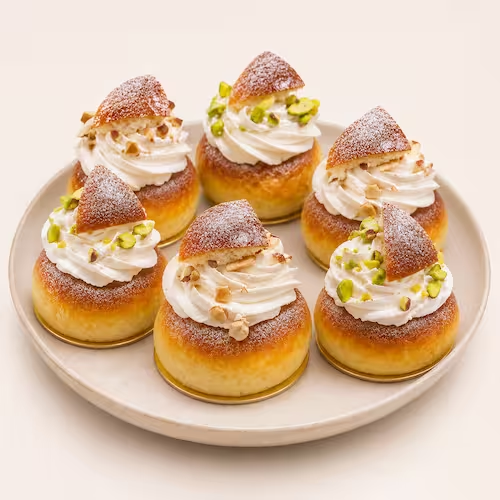
Few pastries capture the joy and seasonal anticipation of Scandinavian baking quite like the Swedish Semla. Every late winter, bakeries across Sweden sell millions of these pillowy, cardamom-spiced wheat buns filled with rich almond paste—or modern nut variations like roasted pistachio—and a crown of freshly whipped cream. Highlighted in our Swedish Treats Guide and recognized across Swedish culinary culture, the Swedish Semla has evolved from a simple medieval bread into one of Europe’s most celebrated fika icons. At Aurora Coffee Hub in Amman, we craft our authentic cardamom cream buns—including both classic roasted almond and pistachio varieties—from scratch to pair effortlessly with bright, aromatic specialty coffee.
قليلةٌ هي المخبوزات التي تجسّد بهجة المطبخ الإسكندنافي وترقّب المواسم مثل كعكة السيملا السويدية (Swedish Semla)؛ ففي أواخر كل شتاء، تبيع المخابز في أنحاء السويد الملايين من هذه الكعكات الهشة المعطّرة بالهيل والمحشوة بعجينة اللوز الغنية—أو بنكهات عصرية مثل الفستق الحلبي المحمص—مع تاجٍ من الكريمة المخفوقة الطازجة. وقد تطوّرت السيملا السويدية عبر القرون من مجرد رغيف خبز بسيط في العصور الوسطى لتصبح اليوم أيقونة أساسية في طقوس الفيكا السويدية. وفي أورورا كوفي هب بعمّان، نُحضّر كعكة السيملا السويدية الأصيلة بنكهتي اللوز الكلاسيكي والفستق الحلبي لتتناغم مع القهوة المختصة ذات التحميص النوردي المتوازن.
1. The History of the Swedish Semla: From Fasting Bread to Royal Indulgence
١. تاريخ كعكة السيملا السويدية: من خبز الصيام البسيط إلى حلوى الملوك
The story of the Swedish Semla spans more than 700 years of Northern European history, shaped by religion, royal banquets, and evolving baking craft:
- Roman & Medieval Origins: The word semla derives from the Latin simila, meaning fine wheat flour. Originally, it was a plain, dense white-flour bun eaten exclusively on Fettisdagen (Shrove Tuesday)—the final day of rich feasting before the 40-day Christian fasting period of Lent.
- The Birth of Hetvägg: During the 16th and 17th centuries, Swedes began hollowing out the bun, filling it with butter and spices, and serving it submerged in a bowl of warm, spiced milk—a dish known as hetvägg (from the Low German hete Weggen, meaning “hot wedges”).
- King Adolf Fredrik’s Famous Banquet (1771): The Swedish Semla gained lasting notoriety when King Adolf Fredrik passed away on Shrove Tuesday after a lavish meal of lobster, caviar, sauerkraut, kippers, champagne—and 14 servings of hetvägg.
- 19th & 20th Century Transformation: In the mid-1800s, Stockholm pastry chefs introduced sweet almond paste (mandelmassa) into the center, and by the 1930s, generous swirls of freshly whipped cream completed the classic Swedish Semla we know today.
تمتد قصة كعكة السيملا السويدية لأكثر من سبعة قرون في تاريخ شمال أوروبا، حيث تشكّلت ملامحها عبر التقاليد الموسمية وتطوّر فنون الخَبز:
- الجذور اللاتينية والعصور الوسطى: تشتق كلمة «سيملا» (Semla) من الكلمة اللاتينية Simila التي تعني دقيق القمح الفاخر. في البداية، كانت مجرد رغيف أبيض بسيط يُتناول حصرياً في «يوم الثلاثاء الدسم» (Fettisdagen) قبيل بدء فترة الصيام التقليدية.
- تقليد الحليب الساخن (Hetvägg): في القرنين السادس عشر والسابع عشر، بدأ السويديون بتفريغ قلب الكعكة وحشوها بالزبدة والتوابل وتقديمها مغمورة في وعاء من الحليب الدافئ.
- مأدبة الملك أدولف فريدريك الشهيرة (1771): ارتبط اسم السيملا السويدية بقصة تاريخية شهيرة عندما توفي الملك أدولف فريدريك بعد مأدبة فاخرة اختتمها بتناول 14 حصة من السيملا بالحليب الساخن.
- التحوّل الحديث في القرن العشرين: في منتصف القرن التاسع عشر أضاف الخبازون عجينة اللوز الحلوة، وبحلول ثلاثينيات القرن الماضي أصبحت الكريمة المخفوقة الطازجة اللمسة النهائية التي منحت كعكة السيملا السويدية شكلها الكلاسيكي اليوم.
2. Anatomy of an Authentic Swedish Semla: The Four Essential Layers
٢. تشريح كعكة السيملا السويدية الأصيلة: الطبقات الأربع الأساسية
A true artisan Swedish Semla depends on balance—not excessive sugar. Each of the four structural components plays a distinct sensory role:
- 1. The Cardamom Wheat Bun (Vetebulle): Enriched with whole milk, butter, a touch of sugar, and freshly mortar-crushed green cardamom seeds. Coarsely ground cardamom releases bright, citrusy-floral oils that distinguish a real Nordic bun from ordinary sweet rolls.
- 2. The Nut Paste Filling (Mandelmassa or Pistachio): Traditional Swedish bakers scoop out a small well from the bottom half of the bun, mix the soft bread crumbs with roasted blanched almonds (or stone-ground pistachios in modern versions), sugar, and a splash of milk or cream, and spoon this velvety paste back into the center.
- 3. Unsweetened Whipped Cream (Vispgrädde): Piped generously over the nut paste using a star nozzle, pure heavy cream is whipped to soft-to-medium peaks without added sugar—balancing the sweetness of the filling.
- 4. The Powdered Sugar Lid (Locket): The sliced top of the bun—often cut into a neat triangle—is placed gently atop the cream cloud, garnished with toasted almond slivers or crushed pistachios, and finished with a snowfall of icing sugar.
تعتمد جودة كعكة السيملا السويدية الحرفية على توازن النكهات دون حلاوة مفرطة، حيث يؤدي كل مكون دوراً حسياً متكاملاً:
- ١. كعكة القمح بالهيل (Vetebulle): عجينة طرية مخبوزة بالحليب والزبدة وحبوب الهيل الأخضر المطحونة خشناً لإطلاق زيوتها العطرية المنعشة.
- ٢. حشوة عجينة المكسرات (Mandelmassa أو الفستق): يُفرّغ تجويف صغير في قلب الكعكة، ويُخلط الفتات الطري مع اللوز المحمص المطحون—أو الفستق الحلبي المحمص في النسخة العصرية—والسكر وقليل من الحليب ليمنح حشوة غنية ومتماسكة.
- ٣. الكريمة المخفوقة غير المحلاة (Vispgrädde): تُخفق الكريمة الطبيعية الطازجة دون سكر مضاف وتُوزّع بسخاء فوق الحشوة لتكسر حلاوتها وتمنح قواماً خفيفاً كالسحاب.
- ٤. الغطاء المرشوش بالسكر البودرة (Locket): يُقص الجزء العلوي من الكعكة—غالباً على شكل مثلث أنيق—ويُوضع برفق فوق الكريمة مع قطع اللوز المحمص أو الفستق المجروش ورشة ناعمة من السكر البودرة.
3. Traditional & Modern Variations of the Swedish Semla
٣. طرق التقديم التقليدية والابتكارات الحديثة لكعكة السيملا
While purists fiercely defend the classic almond recipe, creativity around the Swedish Semla has sparked regional traditions and beloved modern reinterpretations across Scandinavia and beyond:
| Semla Style | Key Ingredients & Twist | How It Is Enjoyed |
|---|---|---|
| Classic Almond Swedish Semla | Cardamom bun, roasted almond paste, whipped cream, toasted almond pieces, powdered sugar. | Eaten by hand (lifting the lid first!) or with a dessert fork alongside black coffee. |
| Pistachio Semla (Pistagesemla) | Cardamom bun filled with velvety roasted pistachio paste, whipped cream, and crushed green pistachios. | One of the most popular modern artisanal twists, bridging Nordic baking with Levantine nut flavors. |
| Hetvägg (Warm Milk Bowl) | Classic Swedish Semla placed in a deep soup bowl of steaming milk dusted with cinnamon. | Eaten with a spoon as the bun absorbs the warm spiced milk. |
| Laskiaispulla (Finnish Version) | Cardamom bun filled with whipped cream and either almond paste or strawberry/raspberry jam. | Enjoyed across Finland on Shrove Tuesday (Laskiainen). |
| Semmelwrap | Thinly rolled cardamom flatbread wrapped like a crêpe around almond paste and whipped cream. | Invented in Stockholm in 2015 for mess-free eating on the go. |
| Wienersemla & Vanilla Semla | Flaky croissant-style puff pastry (Wienersemla) or silky vanilla custard replacing almond paste. | Popular modern bakery alternatives for nut-free or pastry lovers. |
رغم تمسّك عشاق الكلاسيكية بوصفة اللوز الأصلية، فقد ألهمت كعكة السيملا السويدية طرق تقديم إقليمية وابتكارات عصرية متنوعة:
| نوع السيملا | المكونات وطريقة التحضير | أسلوب التقديم |
|---|---|---|
| السيملا السويدية الكلاسيكية باللوز | كعكة الهيل، عجينة اللوز المحمص، الكريمة المخفوقة، رقائق اللوز، والسكر البودرة. | تُؤكل باليد (ببدء تناول الغطاء العلوي أولاً!) أو بالشوكة مع القهوة السوداء. |
| سيملا الفستق الحلبي (Pistagesemla) | كعكة الهيل محشوة بعجينة الفستق الحلبي المحمص والكريمة المخفوقة مع الفستق المجروش. | من أشهر الابتكارات الحرفية الحديثة التي تجمع بين روح المخبوزات السويدية ونكهة الفستق الشرقية الغنية. |
| هيتفيغ (Hetvägg) | كعكة السيملا الكلاسيكية داخل وعاء عميق من الحليب الساخن مع رشة قرفة. | تُؤكل بالملعقة بعد أن تتشرب الكعكة الحليب الدافئ. |
| النسخة الفنلندية (Laskiaispulla) | كعكة هيل محشوة بالكريمة مع اختيار عجينة اللوز أو مربى التوت والفراولة. | تُقدّم في فنلندا خلال احتفالات نهاية الشتاء. |
| سيميل راب (Semmelwrap) | عجينة هيل رقيقة ملفوفة كالكريب حول حشوة اللوز والكريمة. | ابتُكرت في ستوكهولم عام 2015 لتسهيل تناولها أثناء التنقل. |
| فينرسيملا وسيملا الفانيليا | عجينة كرواسون مورّقة (Wienersemla) أو استبدال اللوز بكاسترد الفانيليا. | خيارات عصرية لمحبي العجائن المورّقة أو لمن يفضلون بديلاً خالياً من المكسرات. |
4. How to Eat a Swedish Semla Like a Local & Best Coffee Pairings
٤. كيف تتناول السيملا على الطريقة السويدية وأفضل أنواع القهوة معها؟
Because a tall Swedish Semla can easily leave powdered sugar on your nose, Swedes follow a simple three-step technique: first, lift off the top lid and use it like a spoon to scoop a bite of whipped cream; second, enjoy the cream-and-nut-filled bun; and finally, sip clean, freshly brewed coffee between bites. Light-to-medium Nordic filter coffees—such as washed Ethiopian or Kenyan pour-overs—cut cleanly through the rich cream while amplifying the aromatic cardamom, roasted almond, and pistachio notes.
لأن ارتفاع كعكة السيملا السويدية ووفرة كريمتها قد يتركان أثراً لطيفاً من السكر البودرة، يتبع السويديون خطوات بسيطة للاستمتاع بها: أولاً، ارفع الغطاء العلوي واستخدمه كملعقة لتذوق طبقة من الكريمة؛ ثانياً، استمتع بالكعكة المحشوة باللوز أو الفستق والكريمة؛ وأخيراً، ارتشف القهوة السوداء الطازجة بين اللقمات. وتُعد القهوة المقطرة ذات التحميص الفاتح إلى المتوسط—مثل المحاصيل الإثيوبية المغسولة—الخيار الأمثل لموازنة غنى الكريمة وإبراز نكهة الهيل العطرية والمكسرات المحمصة.
5. Frequently Asked Questions About the Swedish Semla
٥. أسئلة شائعة حول كعكة السيملا السويدية
What does a Swedish Semla taste like?
A Swedish Semla combines warm, aromatic green cardamom bread with sweet, nutty roasted almond paste (or rich roasted pistachio paste) and fresh, airy unsweetened whipped cream—delivering rich comfort without feeling overly sugary.
When is Semla traditionally eaten in Sweden?
Its official celebration day is Fettisdagen (Shrove Tuesday, falling in February or early March), though Swedish bakeries serve them throughout January, February, and March.
What is the difference between a Semla and a regular cream puff?
Unlike choux pastry cream puffs, a Swedish Semla is baked from yeasted, cardamom-spiced wheat brioche-style dough and always features a rich core of almond or pistachio paste beneath the whipped cream.
ما هو مذاق كعكة السيملا السويدية؟
تجمع السيملا السويدية بين نكهة الهيل الأخضر الدافئة في العجينة، وحلاوة اللوز المحمص أو الفستق الحلبي الغنية، وخفة الكريمة المخفوقة الطازجة غير المحلاة، مما يمنح توازناً مثالياً دون ثقل.
متى تُؤكل السيملا تقليدياً في السويد؟
يومها الرسمي هو «الثلاثاء الدسم» (Fettisdagen) في شهر فبراير أو أوائل مارس، وتقدّمها المخابز السويدية طوال أشهر الشتاء وبدايات الربيع.
ما الفرق بين السيملا وكعكة الكريمة العادية؟
تُخبز السيملا السويدية من عجينة القمح المخمّرة والمنكّهة بالهيل الطازج، وتتميز بوجود طبقة أساسية من عجينة اللوز أو الفستق أسفل الكريمة المخفوقة.
6. Experience Authentic Swedish Semla in Amman at Aurora Coffee Hub
٦. استمتع بكعكة السيملا السويدية الأصيلة في عمّان لدى أورورا كوفي هب
You do not need a flight to Stockholm to experience an authentic Swedish Semla. Visit Aurora Coffee Hub on Fahmi Hashem Street near 7th Circle in Amman to savor freshly baked cardamom cream buns in both classic roasted almond and pistachio flavors alongside single-origin pour-overs, order directly through our online shop, explore our full bakery and sweets collection, or discover more Nordic classics in our Swedish Treats Guide!
لست بحاجة للسفر إلى ستوكهولم لتتذوق كعكة السيملا السويدية الأصيلة؛ ندعوك لزيارة أورورا كوفي هب في شارع فهمي هاشم قرب الدوار السابع بعمّان للاستمتاع بكعكة السيملا الطازجة بنكهتي اللوز المحمص الكلاسيكي والفستق الحلبي مع قهوتنا المختصة، أو الطلب مباشرة عبر متجرنا الإلكتروني، وتصفح تشكيلتنا الكاملة في قسم المخبوزات والحلويات، أو استكشاف المزيد من الكلاسيكيات في دليل المخبوزات السويدية!