
Why Coffee Tastes Fruity: 5 Proven Science Rules of Flavor
لماذا تحمل القهوة نكهات الفواكه؟ 5 حقائق علمية وراء سحر المذاق
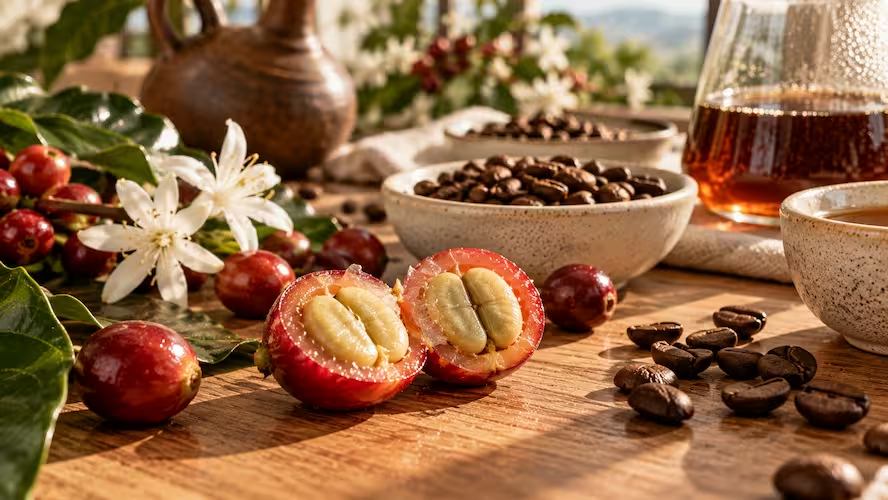
When newcomers taste specialty filter coffee for the first time, one question almost always surfaces: why coffee tastes fruity when no artificial flavorings or fruit syrups have been added. The answer surprises many: coffee is not an ordinary bean, but the botanical seed of a sweet tropical cherry. Discovering why coffee tastes fruity requires tracing an intricate chain of organic chemistry—from high-altitude soil precursors and fruit sugars to microbial fermentation and careful roasting. At Aurora Coffee Hub, our Scandinavian sanctuary in Jordan celebrates these organic aromatics by pairing light-roast Nordic precision with single origins from the world’s finest terroirs.
عندما يتذوق رواد القهوة المختصة فنجان ترشيح نقي لأول مرة، يتبادر إلى أذهانهم تساؤل بدهي: لماذا تحمل القهوة نكهات الفواكه مثل التوت والحمضيات والخوخ دون إضافة أي محليات أو منكهات صناعية؟ تكمن الإجابة في حقيقة نباتية بسيطة: حبة البن ليست بذرة جافة عادية، بل هي النواة الداخلية لكرزة فاكهة استوائية مفعمة بالسكريات. إن فهم أسباب ظهور هذه النوتات الفاكهية يتطلب تتبع مسار كيميائي مذهل يبدأ من تربة المزارع المرتفعة، ويمر بالتخمير الحيوي، وصولاً إلى دقة التحميص. وفي أورورا كوفي هب، ينطلق ملاذنا الإسكندنافي في الأردن من تكريم هذه الخصائص العضوية عبر تقديم محاصيل مفلترة تعكس طهارة المنشأ ونقاء المعالجة.
1. Why Coffee Tastes Fruity: The Bean’s Natural Chemistry
١. الكيمياء الطبيعية لحبة البن: الأحماض العضوية ومركبات الرائحة
The botanical foundation of why coffee tastes fruity rests entirely within the seed’s chemical makeup. According to research published by the Specialty Coffee Association (SCA), green coffee seeds synthesize hundreds of organic acids, sucrose chains, and aromatic volatile compounds during cherry maturation:
- Natural Organic Acids: Coffee contains citric acid (imparting bright lemon, grapefruit, and orange notes), malic acid (yielding the crisp, refreshing bite of green apples and stone fruits), and tartaric acid (producing sweet, wine-like grape nuances).
- Natural Sucrose & Fructose: As the cherry ripens on the tree, complex carbohydrates convert into soluble sugars within the mucilage and seed, creating the foundation for caramelization and fruit-like sweetness.
- Volatile Aroma Compounds: Hundreds of aromatic esters, aldehydes, and ketones naturally synthesize within the coffee seed, generating delicate floral, sweet citrus, and exotic tropical bouquets before the bean ever sees heat.
يرتكز التفسير الأولي لـ أسباب ظهور نكهات الفواكه في القهوة على التكوين الكيميائي الفطري للبذرة؛ فوفقاً لأبحاث جمعية القهوة المختصة (SCA)، تخلق شجرة البن أثناء نضج الكرزة مصفوفة معقدة من الأحماض العضوية والسكريات والزيوت العطرية:
- الأحماض العضوية الطبيعية: تحتوي الحبة على حمض الستريك (Citric Acid) الذي يمنح إيحاءات الليمون والبرتقال، وحمض الماليك (Malic Acid) الذي يعطي لمعان التفاح الأخضر والخوخ، وحمض الترتاريك (Tartaric Acid) المسؤول عن الطابع العنبِي السلس.
- السكريات الطبيعية: أثناء نضج الكرز، تتحول الكربوهيدرات المعقدة إلى سكريات أحادية داخل الغشاء العسلي والبذرة، مما يؤسس للحلاوة الطبيعية في الفنجان.
- المركبات العطرية المتطايرة: تنتج البذرة مئات الإسترات والألدهيدات التي تصنع باقات عطرية تحاكي زهور الياسمين، والتوت البري، والفواكه الاستوائية قبل أن تلامس الحبة أي حرارة.
2. Why Coffee Tastes Fruity: Where Coffee Grows Shapes Flavor
٢. التيروار الجغرافي: أثر الارتفاع والمناخ والتربة على السكريات
Just like fine wine, green coffee is deeply bound to its terroir. The botanical variety, elevation, microclimate, soil composition, and sun exposure dictate how sugars and acids develop inside the coffee cherry, directly explaining why coffee tastes fruity in high-grade lots:
| Terroir Factor | Agricultural Dynamics | Sensory Flavor Result |
|---|---|---|
| Botanical Variety | Genetic varieties (e.g., Ethiopian Heirloom, Geisha, SL-28, Bourbon) possess distinct baseline chemical profiles. | Inherent predisposition toward floral jasmine, blackcurrant, or stone-fruit notes. |
| Altitude (1,600m – 2,200m) | Cooler highland temperatures dramatically slow cherry maturation, extending metabolic sugar development. | Higher bean density, concentrated sucrose, and crisp, complex fruit acidity. |
| Microclimate & Sunlight | Carefully distributed rainfall, mist canopies, and sunlight exposure calibrate photosynthetic rates. | Uniform sugar synthesis, preventing green vegetal astringency. |
| Volcanic Soil Chemistry | Nutrient-dense volcanic loam rich in potassium, phosphorus, and trace minerals nourishes the plant. | Supports healthy cellular health, yielding deep sweetness and full body. |
تتطابق القهوة المختصة مع المحاصيل الزراعية الفاخرة في ارتباطها الوثيق ببيئتها؛ فالسلالة والارتفاع والمناخ ونوعية التربة تشكل العوامل الحاسمة لـ تكون النكهات الفاكهية في القهوة:
| عنصر البيئة الزراعية | التأثير الفسيولوجي على الشجرة | الأثر الحسي في الفنجان |
|---|---|---|
| السلالة النباتية (Variety) | تمتلك سلالات الأرابيكا المتوارثة (مثل الإيرلوم، والغيشا، والبوربون) تركيباً جينياً فريداً. | استعداد وراثي مسبق لإبراز زهور الياسمين والتوت البري والفواكه الاستوائية. |
| الارتفاع الشاهق (1600 – 2200م) | انخفاض درجات الحرارة في المرتفعات يبطئ نضج الكرز، مما يطيل فترة تصنيع السكريات. | كثافة خلوية صلبة، وتركيز عالٍ للسكريات، وحموضة فاكهية براقة ومعقدة. |
| المناخ الجزئي وأشعة الشمس | توزيع الأمطار وساعات السطوع الشمسي يضبطان كفاءة التمثيل الضوئي في الأوراق. | نضج متجانس يحمي البن من الطعم العشبي الفج ويمنحه حلاوة صافية. |
| التربة البركانية الغنية | تربة بركانية غنية بالبوتاسيوم والفوسفور والمعادن المغذية لجذور الشجرة. | بنية حيوية قوية تدعم كثافة القوام وتوازن النكهات. |
3. Why Coffee Tastes Fruity: Post-Harvest Fermentation Dynamics
٣. كيمياء التخمير والمعالجة: كيف تعيد الميكروبات تشكيل النكهة؟
Fermentation is the crucible of specialty coffee flavor creation. During post-harvest handling, wild and cultured microorganisms (yeasts, lactic acid bacteria, and enzymes) interact directly with the sugars inside the cherry mucilage, generating vibrant sensory esters that explain why coffee tastes fruity:
- Microbial Action: Yeasts and bacteria break down complex polysaccharides into volatile organic acids and fruit-forward aromatic compounds.
- Duration of Fermentation: Shorter ferments preserve delicate floral clarity, while extended anaerobic fermentations (48–120 hours) intensify dense tropical fruit, plum, and wine-like qualities.
- Temperature Calibration: Ambient warmth accelerates microbial metabolism, yielding boozy and dried-fruit intensity, whereas cold-maceration slows kinetics to safeguard crisp malic brightness.
- Processing Styles: Natural processing dries the whole cherry to infuse jammy strawberry sweetness; Washed processing strips pulp for transparent citrus acidity; and Honey processing balances sweetness and fruit body.
يعد التخمير البيولوجي المصنع الحقيقي لتوليد النكهات الاستثنائية؛ فأثناء المعالجة الزراعية، تتفاعل الكائنات الحية الدقيقة الطبيعية (الخمائر وبكتيريا حمض اللاكتيك) مع سكريات الغشاء المحيط بالحبة لتنتج نوتات عطرية فاكهية معقدة:
- النشاط الميكروبي: تحلل الخمائر سلاسل السكريات والبروتينات لتنتج إسترات وأحماضاً فاكهية جديدة كلياً تعزز تعقيد الكوب.
- زمن التخمير: الفترات القصيرة تحفظ نقاء الزهور والحمضيات، بينما يمنح التخمير اللاهوائي الممتد (48 إلى 120 ساعة) طابعاً نبيذياً ونكهات فواكه استوائية مركزة.
- درجة الحرارة: تسرع البيئات الدافئة نشاط البكتيريا لتبرز الفواكه الناضجة، بينما يحافظ التخمير البارد على حيوية حمض التفاح الأخضر.
- أسلوب المعالجة: تمنح المعالجة المجففة حلاوة مربى الفراولة والتوت؛ وتبرز المعالجة المغسولة حمضية الليمون الصافية؛ وتوفر معالجة العسلي توازناً سلساً بين القوام والحلاوة.
4. Why Coffee Tastes Fruity: The Roasting Transformation
٤. علم التحميص النوردي: كيف تحمي الحرارة أحماض الفاكهة من الاحتراق؟
Roasting is the bridge between raw agricultural precursors and the final sensory experience. Understanding why coffee tastes fruity requires examining how heat develops or destroys delicate organic compounds across roasting phases, as explored in our Coffee Roast Levels Guide:
- Drying Phase: Moisture gently evaporates from the raw seed, turning the green bean yellow and priming internal cellular structures for thermodynamic reactions.
- Maillard Reaction & Caramelization: Heat causes amino acids and natural sugars to bond, generating hundreds of flavor compounds that introduce honey, caramel, and sweet fruit jam complexities.
- First Crack: Water vapor and carbon dioxide build immense pressure, bursting bean cell walls in an audible pop. Flavor precursors rapidly transition into vibrant aromatic fruit esters.
- The Nordic Roasting Rule: Dark commercial roasting incinerates volatile fruit acids, replacing them with bitter pyrolytic ash and carbon. In contrast, Nordic light roasting terminates development right after First Crack, keeping sparkling citric, malic, and phosphoric fruit acids perfectly intact.
يشكل التحميص الجسر النهائي الذي يحول المركبات الزراعية الخام إلى نكهات حسية متألقة؛ فالتحميص الخاطئ قد يدمر كل ما بنته الطبيعة في الحبة، كما نوضح في دليل درجات تحميص القهوة:
- مرحلة التجفيف (Drying): يتبخر الماء الكامن داخل البذرة الخضراء لتتحول إلى اللون الأصفر الفاتح تمهيداً لبدء التفاعلات الكيميائية.
- تفاعل ميلارد وتكرمل السكريات: تتفاعل الأحماض الأمينية مع السكريات الطبيعية تحت الحرارة لإنتاج مئات المركبات التي تعطي نكهات الكراميل وحلاوة الفواكه المطبوخة.
- الفرقعة الأولى (First Crack): يؤدي ضغط البخار الداخلي إلى تمدد خلايا الحبة وإطلاق صوت فرقعة واضح؛ وتتحرر في هذه اللحظة الزيوت العطرية الفاكهية الحساسة.
- قاعدة التحميص النوردي الفاتح: بينما يدمر التحميص التجاري الداكن الأحماض الفاكهية ويستبدلها بطعم الحرق والمرارة، يوقف التحميص النوردي الفاتح الحرارة فور اكتمال الفرقعة الأولى؛ ليصون أحماض التفاح والحمضيات من الاحتراق.
5. Why Coffee Tastes Fruity: The Final Cup and Manual Brewing
٥. الفنجان النهائي: كيف يبرز التحضير اليدوي نوتات الفواكه الصافية؟
All agricultural and roasting variables converge at the brew bar. To fully experience why coffee tastes fruity in your daily cup, extraction must be calibrated to dissolve sugars and volatile acids without pulling bitter tannins, applying the physics detailed in our guide to mastering coffee brewing variables:
- Paper Filtration Clarity: Brewing with manual pour-overs (such as the V60) uses fibrous paper filters that trap heavy diterpene oils and fines, producing an exceptionally transparent cup that allows fruit acids to shine.
- Water Temperature Balance: Utilizing water heated between 92°C and 94°C dissolves fruit sucrose and delicate esters without scalding the grounds.
- Controlled Pouring Stream: Implementing gentle spiral pouring techniques—as demonstrated in our Ultimate V60 Pour-Over Guide—prevents dry channeling, ensuring uniform dissolution across the entire coffee bed.
تلتقي كافة العوامل الزراعية والتحميصية عند بار التحضير؛ ولإبراز نكهات الفواكه في القهوة بنقاء تام، يجب ضبط متغيرات الاستخلاص وفق أسس فيزيائية دقيقة كما نوضح في دليل التحكم في متغيرات تحضير القهوة:
- نقاء الفلتر الورقي: استخدام أقماع الترشيح اليدوي (مثل V60) يحجز الزيوت الثقيلة والرواسب الدقيقة، مما يمنح فنجاناً شفافاً يسمح للأحماض الفاكهية بالبروز بوضوح.
- حرارة ماء متزنة: استخدام ماء بحرارة بين 92° و 94° مئوية يساعد على إذابة السكريات الطبيعية والإسترات العطرية دون استخلاص المرارة الخشبية.
- انسيابية السكب الهادئ: اتباع تقنيات السكب الحلزوني المنضبط كما فصلنا في دليل تحضير فلاتر V60 الشامل يمنع تشكل القنوات ويضمن استخلاصاً متوازناً.
6. Frequently Asked Questions: Why Coffee Tastes Fruity
٦. أسئلة شائعة حول نكهات الفواكه في القهوة المختصة
Are fruit flavors artificially added to specialty coffee beans?
No. Authentic specialty coffee contains zero additives or syrups. Fruit, floral, and berry tasting notes originate naturally from the bean’s organic acids, terroir, fermentation, and gentle roasting.
Which coffee origins taste the most fruity?
High-altitude single origins—especially Ethiopian coffees (like natural Guji and Yirgacheffe) and Kenyan lots—are world-famous for their pronounced wild berry, stone fruit, and vibrant citrus profiles, as highlighted in our Ethiopian Coffee Origins Guide.
Why doesn’t dark roast coffee taste fruity?
Dark roasting subjects coffee beans to prolonged high heat, which burns and degrades organic citric and malic fruit acids, replacing fruit sweetness with bitter pyrolytic carbon notes.
هل تُضاف نكهات الفواكه صناعياً إلى حبوب القهوة المختصة؟
إطلاقاً؛ القهوة المختصة الأصلية خالية تماماً من أي إضافات أو نكهات؛ فنوتات الفواكه والزهور تنبع طبيعياً من كيمياء البذرة، والتربة، والتخمير، والتحميص الدقيق.
ما هي أكثر محاصيل القهوة التي تبرز فيها النكهات الفاكهية؟
المحاصيل الإفريقية المزروعة في مرتفعات شاهقة، وخاصة البن الإثيوبي (مثل غوجي وييرغاشيف) والبن الكيني، تشتهر عالمياً بنوتات التوت البري والحمضيات الفاقعة، كما نوضح في دليل محاصيل القهوة الإثيوبية.
لماذا لا نشعر بطعم الفواكه في القهوة ذات التحميص الداكن؟
لأن التحميص الداكن يعرض البن لحرارة مفرطة تؤدي إلى تكسير واحتراق الأحماض العضوية الفاكهية، لتحل محلها نكهات الكربون والمرارة الداكنة.
7. Experience Pure Fruit Nuances at Aurora Coffee Hub
٧. تذوق نقاء الإيحاءات الفاكهية في أورورا كوفي هب
Understanding why coffee tastes fruity transforms every sip into an appreciation of botanical craft. When high-altitude harvests, controlled microbial fermentation, and Nordic roasting discipline align, coffee expresses the pure soul of its tropical fruit heritage. Visit Aurora Coffee Hub near 7th Circle in Amman to taste expertly extracted manual brews from our specialty coffee drinks menu, shop freshly roasted whole beans in our curated coffee beans shop, or explore Swedish pastry harmonies in our Swedish Fika & Cardamom Pairing Guide!
يحول فهم أسباب النكهات الفاكهية في القهوة كل فنجان إلى رحلة تذوق حسية تقدر الطبيعة وعلم البن؛ فعندما تلتقي المرتفعات الشاهقة مع التخمير المدروس ودقة التحميص النوردي، تعبر القهوة بصدق عن أصلها النباتي ككرزة استوائية فاخرة. ندعوكم لزيارتنا في أورورا كوفي هب قرب الدوار السابع بعمّان لتذوق أصفى أكواب الترشيح الفاكهية عبر قائمة مشروبات القهوة المختصة، أو تسوق محاصيلكم المفضلة من متجر حبوب البن المختص، وتعرفوا على أسرار الضيافة النوردية في دليل الفيكا السويدية ومخبوزات الهيل!